From Mirrors to Cameras: How MirrorCam Changes the Driver’s View
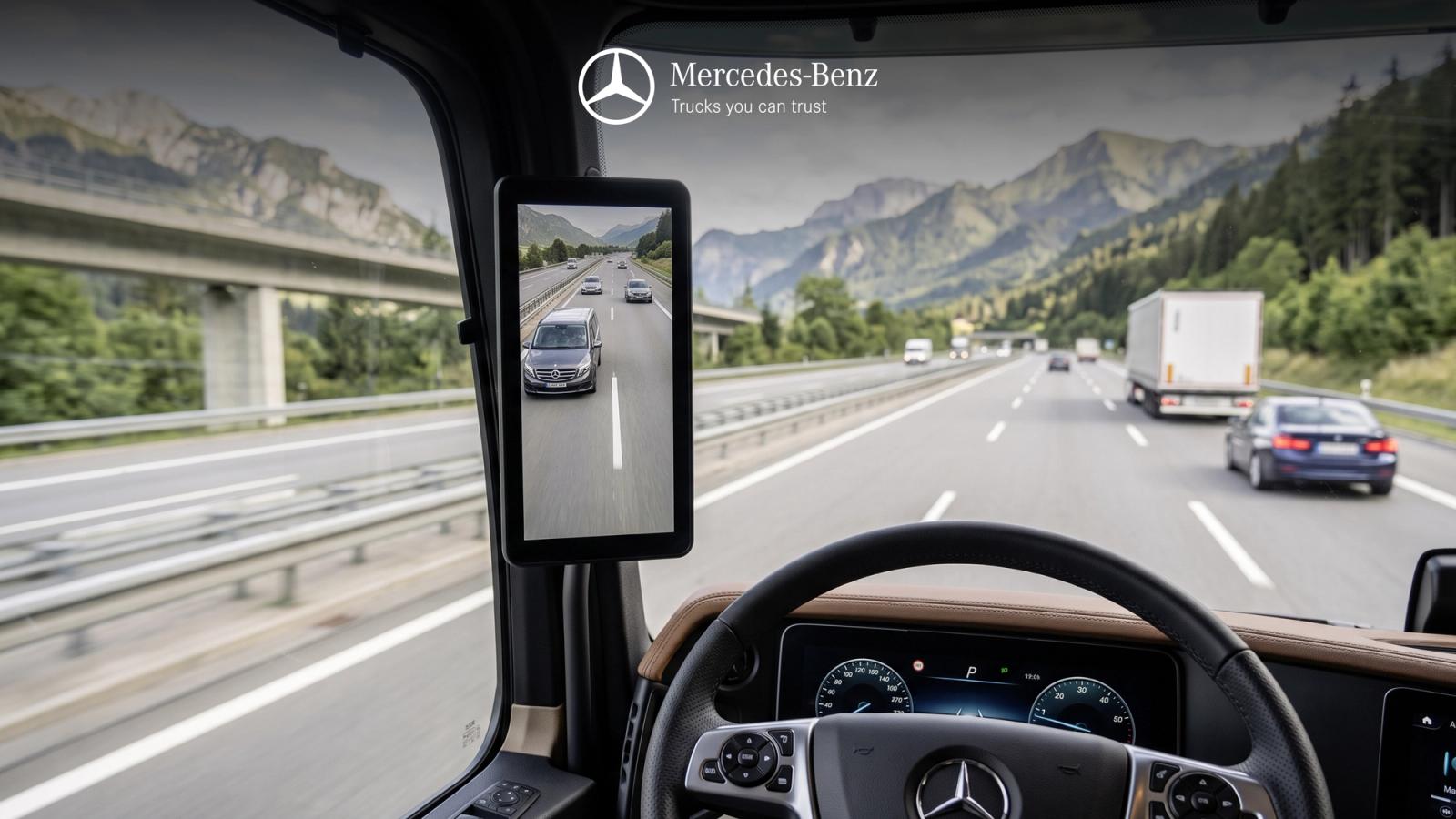
Look at many trucks and one feature immediately stands out: large exterior mirrors.
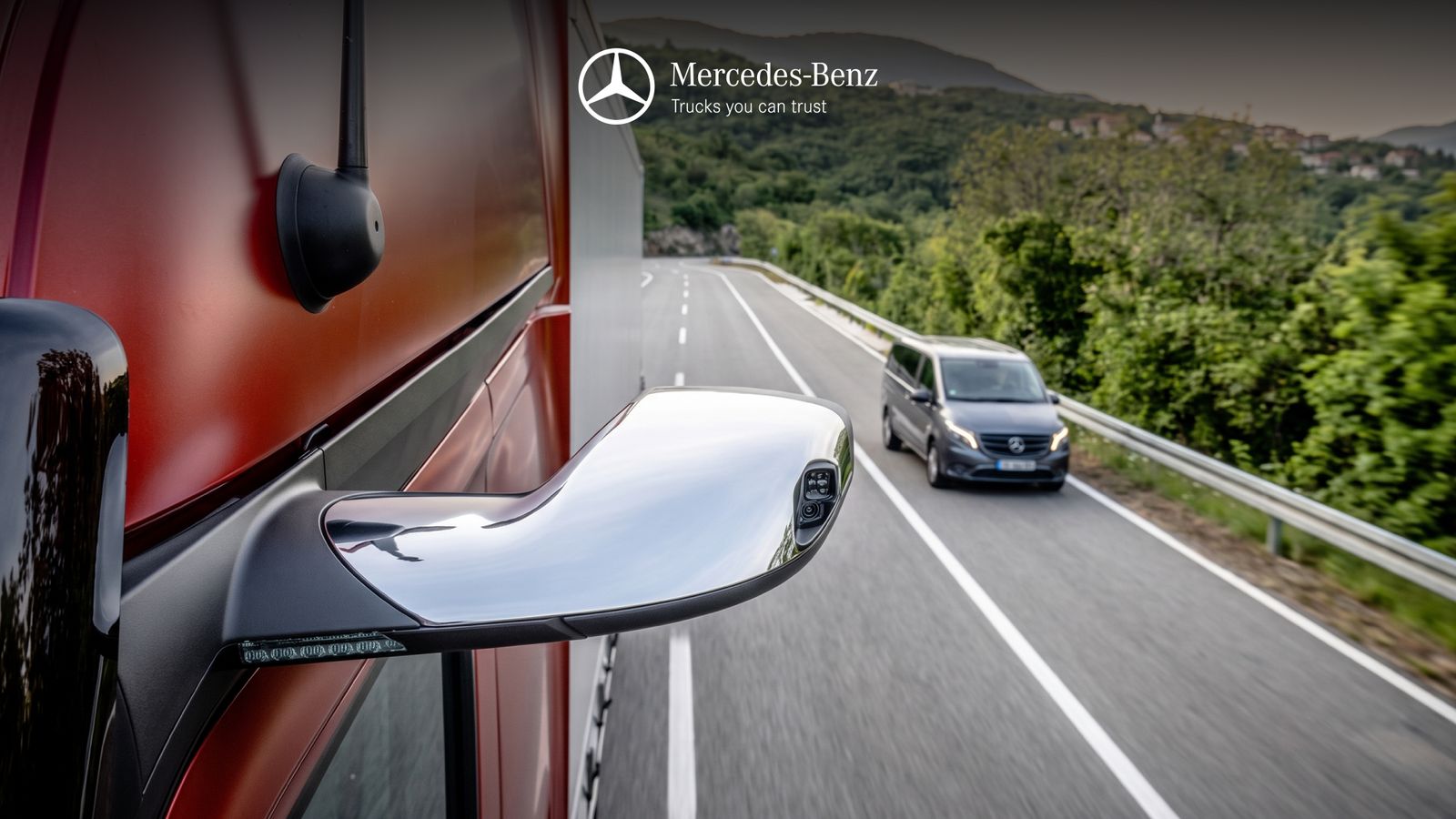
Look at a MirrorCam-equipped Actros and something is different.
Instead of conventional exterior mirrors, the system uses external cameras connected to displays positioned inside the cab on the A-pillars.
Why Change the Traditional Mirror?
Truck drivers need awareness of what is happening around a large vehicle while driving, changing direction and manoeuvring.
MirrorCam moves that information onto digital screens inside the cab, creating a different approach to rear and side visibility.
The two displays form part of the Actros digital cockpit together with the instrument cluster and infotainment system.
Technology That Becomes Part of the Workplace
The interesting part of MirrorCam is not simply replacing one component with another.
It shows how truck design is changing from individual mechanical features toward connected digital systems.
Navigation, driving information and exterior visibility can increasingly become part of one integrated driver environment.
More Than a Visual Change
Removing large conventional mirror housings can also support aerodynamic design.
On long journeys, seemingly small design decisions can become meaningful when repeated over thousands of kilometres.
Mercedes-Benz Trucks has integrated aerodynamic development into its current long-haul cab design, demonstrating how exterior design can contribute to operating efficiency.
Conclusion
MirrorCam is a good example of how an everyday part of a truck can be reconsidered completely.
What was once simply a mirror becomes part of a wider digital driving environment.
Discover Mercedes-Benz Actros technology with DAL Motors.